TOOLBOX / FIBERS / NYLON

nylon.

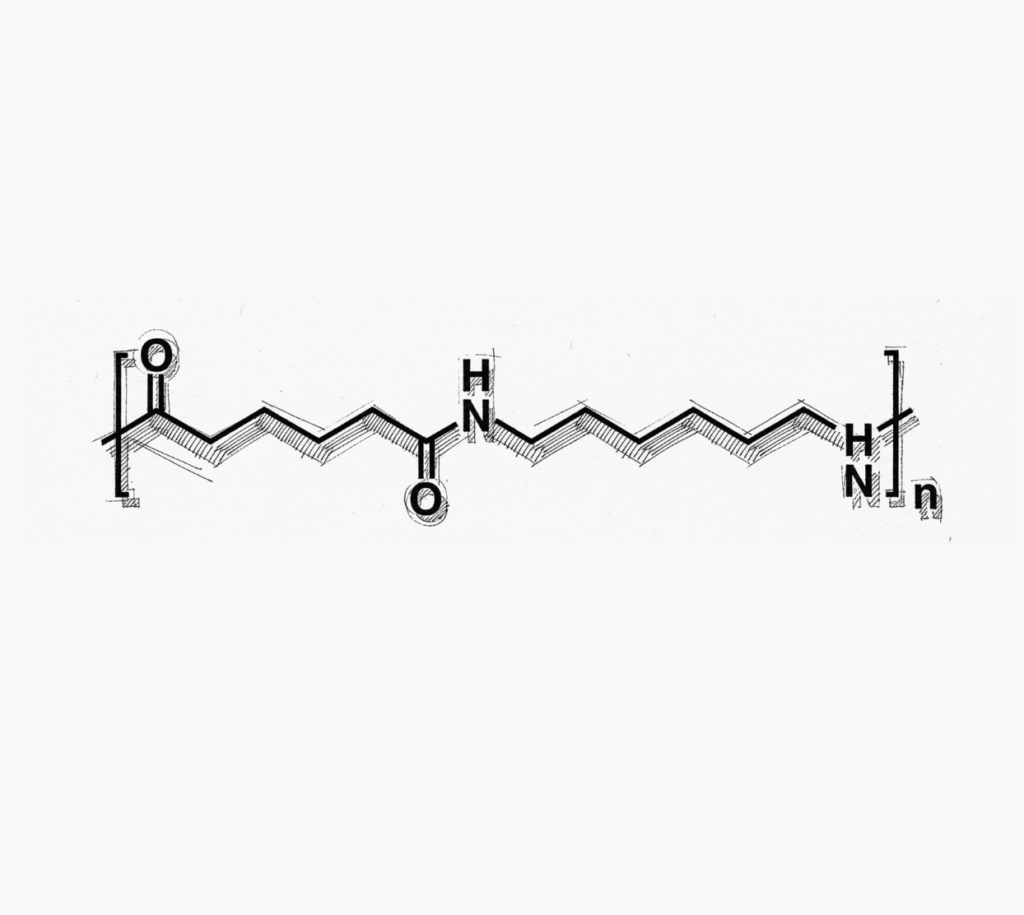
Nylon is a manufactured, synthetic polymer fiber, made out of petroleom. Nylon is a kind of plastic and therefore generally has a significant negative impact during its production, use and disposal. The virgin material of nylon is obtained from a non-renewable source, namely petroleum and during the production of the fibers, greenhouse-gasses are released into the air and cause serious harm to the environment.

Nylon was originally created as a substitute for silk. It is one of the strongest fibers and is elastic. It is usually finished with an application of environmentally unfriendly, durable and water-repellent solution.

Because nylon is a non-renewable source this entry focuses on regenerated nylon.

Regenerated Nylon, also known as ECONYL®, is recycled pre- and post-consumer nylon waste, for example fishing nets, fabric scraps, carpet flooring and industrial plastic. After a radical regeneration and purification process, regenerated nylon is exactly the same as fossil-based nylon. By eliminating the need for barrels of crude oil, CO2 emissions are also drastically reduced when creating ECONYL® regenerated nylon. Nylon has the potential to be recycled infinitely without ever losing its quality.

Since nylon is a synthetic fiber garments made of it tend to last a long time, in use and after use. It has a higher water and energy usage since it needs to be washed more often than garments made of natural fibers.

Nylon is not compostable and should be recycled in a closed-loop process at the end of its garment life. Nylon is a mechanically recycled material. Most mechanically recycled materials are melted at high temperatures destroying contaminants in the process and transforming the material into a reusable form. This however is not the case with nylon. Nylon melts at a much lower temperature and therefore leaving contaminants behind. Therefore nylon must be cleaned thoroughly before being recycled/melted. Good sources of clean, pure postconsumer nylon are difficult to find.

+ PROS

what it gives.

  • is smooth and soft
  • extremely durable, even when wet
  • high elasticity
  • is moisture wicking and fast drying
  • is soil resistant
  • is mildew and fungi resistant
  • takes dyes well
  • does not wrinkle

− CONS

what it asks.

  • is heat sensitive and prone to melt
  • when dyeing in dark shades, can fade during washing
  • issues microplastic
  • lacks breathability
  • easily gathers static electricity
  • causes increased perspiration and tends to become malodorous

ADVICE

what to look for.

Use regenerated nylon or post-consumer nylon fabric. Even though regenerated nylon is better than its virgin counterpart, it still releases microplastics into the water during every laundry cycle. If possible, I’d advise going for natural materials instead or using a wash bag to stop microplastic from being released into the water.

SOURCES & FURTHER READING

where this comes from.

https://materialarchiv.ch/en?type=all&q=nylon

https://www.econyl.com/the-process/

https://eu.patagonia.com/ch/en/our-footprint/recycled-nylon.html

Textilepedia, Fashionary International Ltd, 2020