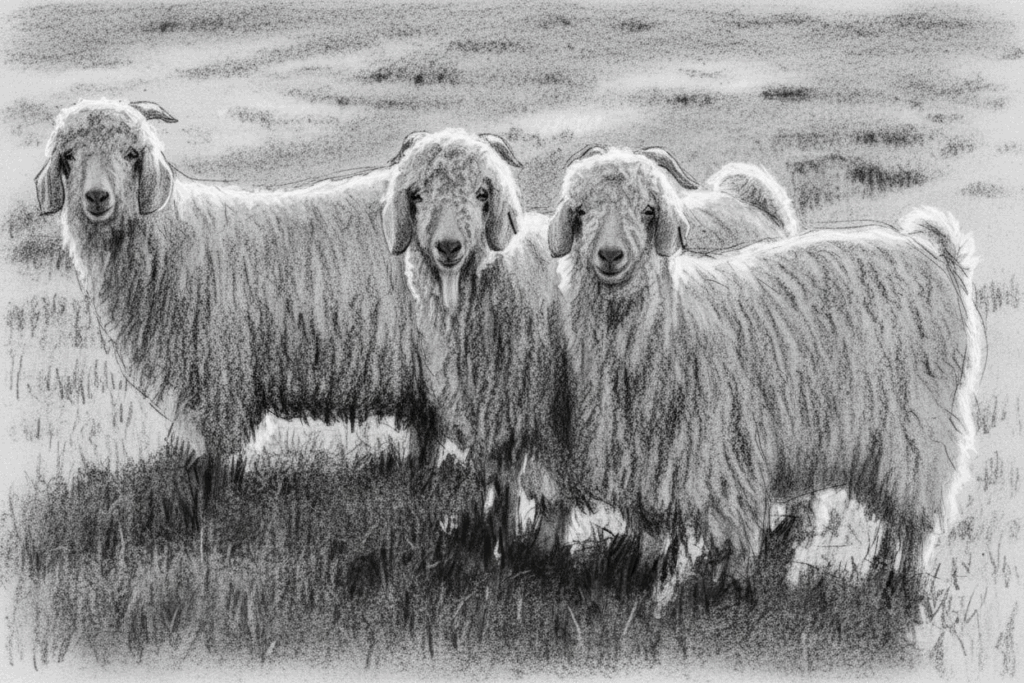
Mohair is the warmest of natural fibers and has a natural shine which makes it a very luxurious fiber. The fiber adapts to all kinds of dyes very well and is therefore often preferred over textiles like wool and alpaca. The unique feature of this fiber is that it keeps the wearer warm even while the fabric is wet. The fiber is also famous for its anti-pilling, anti-matting, and anti-crushing qualities. Fabrics made from Mohair tend to last longer than other wool derived textiles, since Mohair wool is extremely durable thanks to its high tensile strength.
The fiber is obtained from angora goats that usually live free-range on farms. They are then shaved 1 – 2 times a year. Its wool does not contain lanolin or grease, therefore making it easy to wash and a nice alternative to sheep wool since it lacks lanolin which makes it hypoallergenic. The assessing of the quality a yield holds depends on the measurement of the micron of the mohair fibers. The lesser the micron the finer and better the quality of the yield. Since there are different types of yields depending on the micron size, yield can be made throughout the whole goats life. Making the source somewhat sustainable in the sense of the quantity gain from a single source.
However, there are serious concerns regarding the grazing of goats in the Suptropical thicket, as goat grazing has led to extensive transformation of this vegetation. While restoration of thicket has been undertaken by some producers, others remain unaware of the unsustainability of converting an intact, closed canopy succulent thicket into a so-called pseudo-savanna, where only a few remnant trees remain.
Poor farming practices can result in excessive amounts of manure and other toxins entering the soil, causing contaminated waterways.
Untreated mohair fiber is completely compostable. Things like dye, toxic chemicals, blended fibers and trims can hinder compostability.