bamboo.
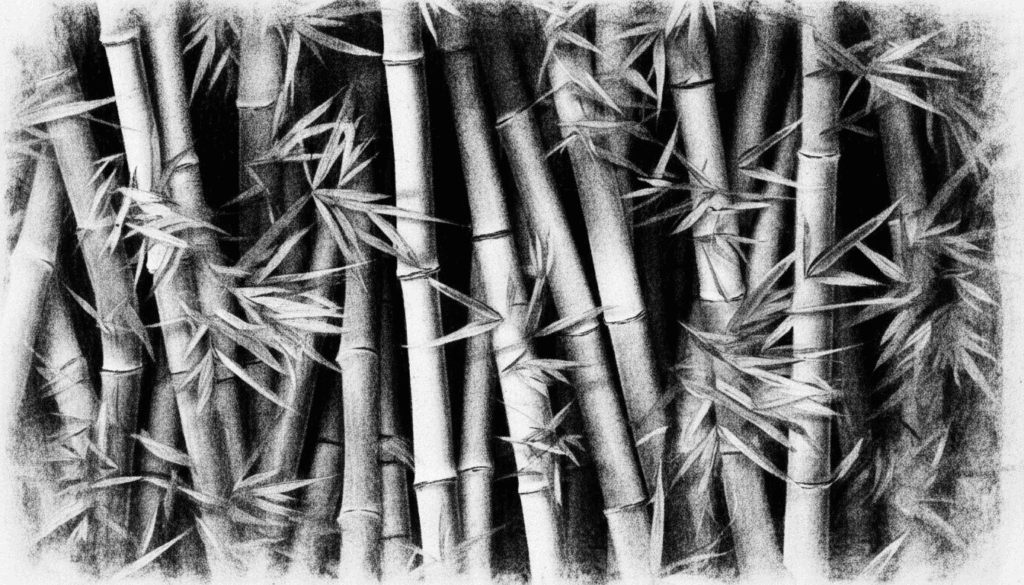
Bamboo is categorized as a natural cellulose bast fiber. It is a fast-growing and renewable grass that often has a beneficial impact on soil and air. Unfortunately, the production of bamboo grass into a textile fiber can be chemically demanding with seriously harmful impacts.
Bamboo grass grows in a variety of climates and is known to grow so quickly that it smothers weeds in the process. As with other fibers – there is no need for the use of chemical pesticides in the production of bamboo grass, there isn’t even a need for irrigation.
The same mechanical process used to produce linen from hemp or flax can be utilized for bamboo linen. Although the retting and processing of bamboo linen can have harmful environmental impacts.
Most commonly, bamboo is used to make manmade cellulose fibers known as rayon. → see Viscose / Rayon / Cupro
Untreated bamboo is compostable. Things like dye, toxic chemicals, blended fibers and trims can hinder its compostability.
