
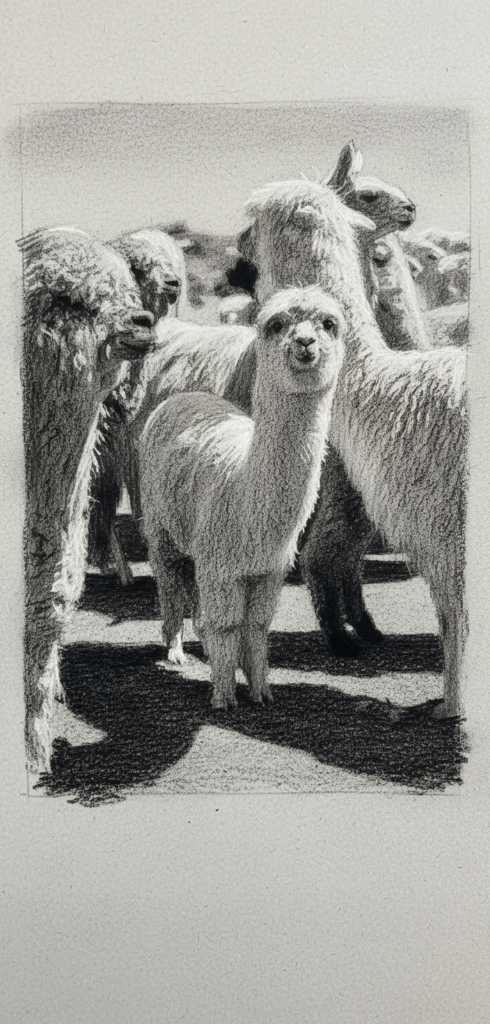
alpaca.
Alpaca is a natural protein fiber. Its wool fiber is obtained from the mammal alpaca, originating mainly from the Andes Mountains.
Alpaca wool has found its use in textiles for centuries. It is considered a premium fiber for its softness, so much so that it was formerly only used for royal garments.
The fiber is obtained from Alpacas that live in their native habitat in free-range. They are then shaved every 1 – 2 years. Its wool does not contain lanolin or grease, therefore making it easy to wash and a nice alternative to sheep wool since it lacks lanolin which makes it hypoallergenic.
Alpaca additionally has a less negative impact on the environment than sheep or goats since it demands very little washing during its garments phase of use.
Poor farming practices can result in excessive amounts of manure and other toxins entering the soil, causing contaminated waterways
Untreated alpaca fiber is completely compostable. Things like dye, toxic chemicals, blended fibers and trims can hinder compostability.
