abaca.
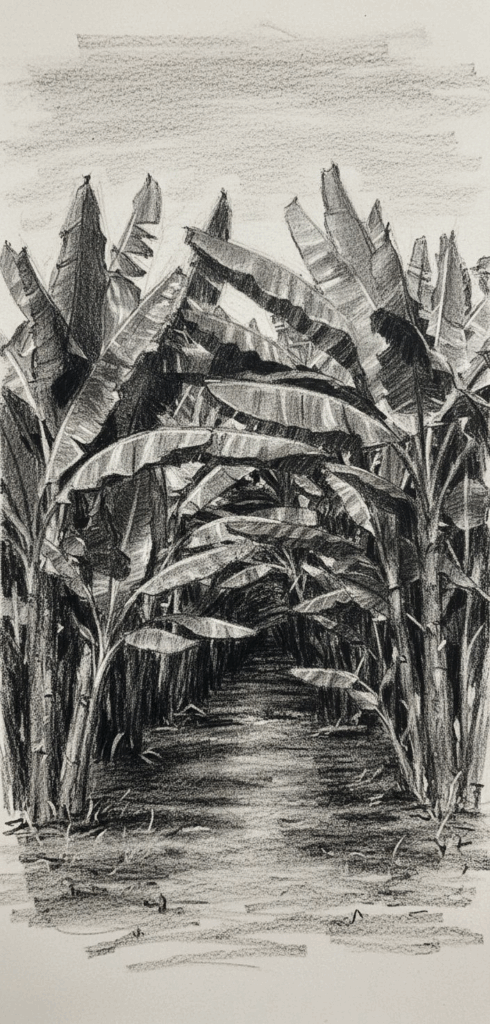
Abacá, also known as manila hemp, is a natural cellulose leaf fiber. Abacá belongs to the banana family and finds its origin in the Philippines.
Abacá fibers are very durable and reach a length of up to 3 meters and the abacá fiber counts as a renewable source. Its harvesting is laborious since each stalk must be cut into strips which are then scraped to extract the pulp it carries. Most of the abacá fibers worldwide are obtained by hand – however, an automatized production process is being developed in South America.
Abacá tends to result in rather stiff fabrics. An extremely stiff and rough woven product of abacá fibers is called Sinamay which is often used to make hats. It’s suitable for hat production since it can be shaped when it’s wet and is sturdy after it dries.
Untreated abacá is completely compostable. Things like dye, toxic chemicals, blended fibers and trims can hinder its compostability.
